
Victories
Here are some recent decisions recognizing the Italian citizenship to our applicants. Those are
great victories for Italian Citizenship Law Firm and its clients. Please see the redacted decisions
from the court of Turin, Florence, Campobasso, Bari, Messina, Caltanissetta, Roma etc.
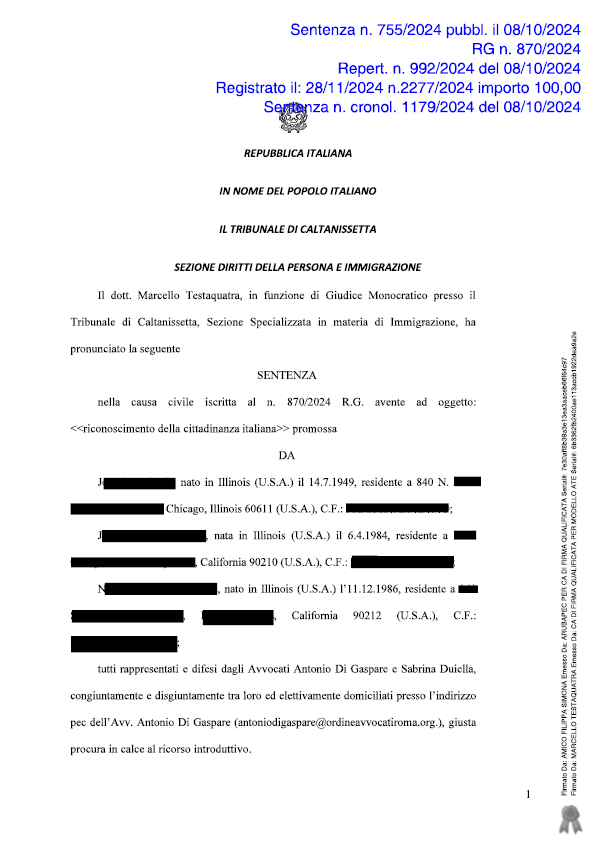
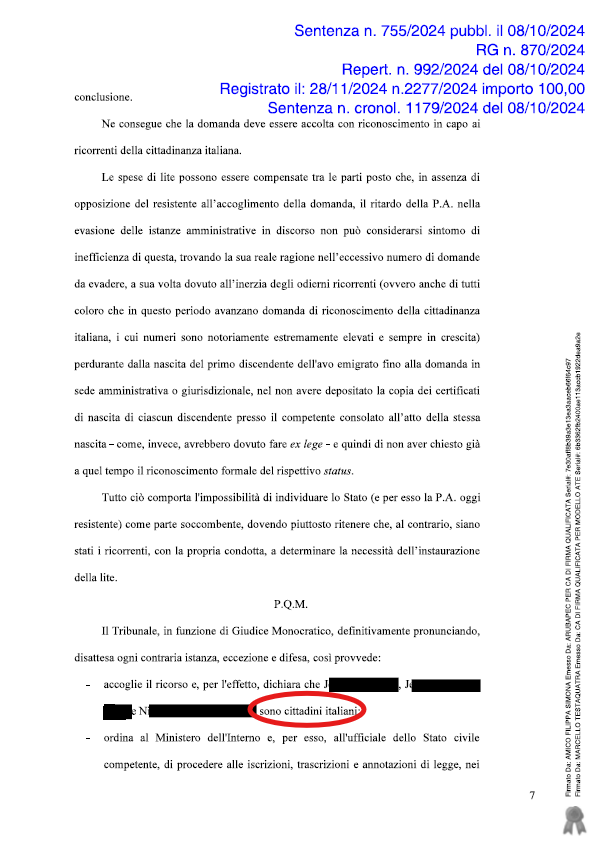
The Court of Caltanissetta
Los Angeles, Italian citizenship.
The father qualified through his Italian-born grandfather,
and the two children through their Italian great-grandfather. Because this case was filed
before March 2025, it was not subject to the new restrictions introduced by Decree-Law No.
36/2025 (now Law 74/2025), which significantly limits recognition of Italian citizenship to
applicants with at least one Italian-born parent or grandparent—marking a major shift from
the previous rules that allowed claims through more distant ancestors.
The Court of Campobasso
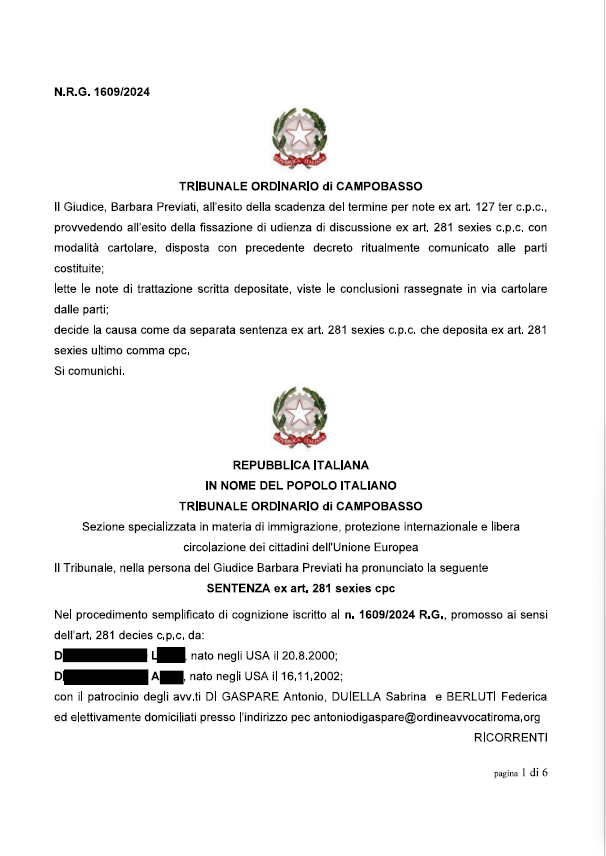
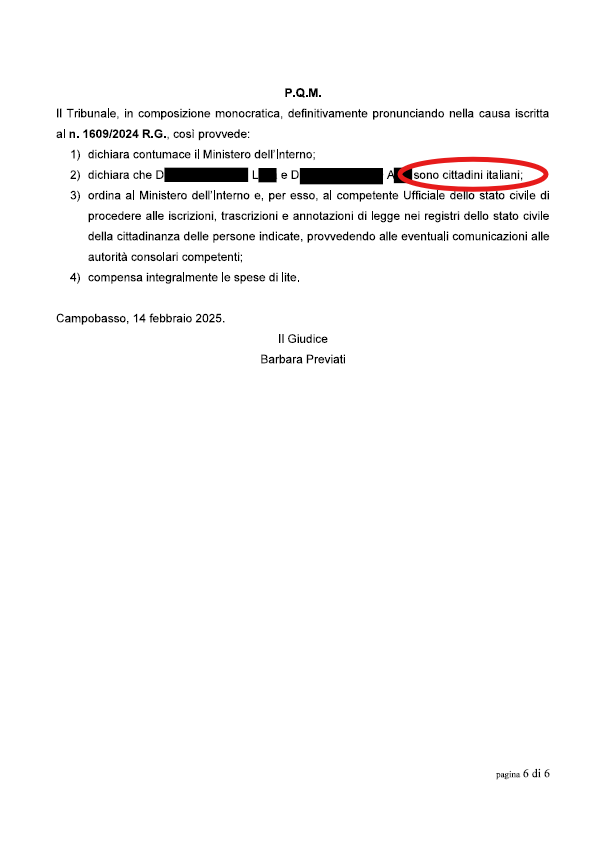
citizen since their father was an Italian citizen.
The Court has highlighted that this application should have been approved administratively had the
procedure been properly handled; however, due to the long-standing administrative paralysis
affecting many Italian Consulates abroad—including the Consulate General of Italy in Chicago,
which currently does not allow applicants to book appointments—the brothers were unable to even
initiate the administrative process. This systemic backlog, which violates the requirement of timely
procedures under Italian law, effectively amounted to an unjustified denial of their rights and
justified their decision to seek judicial relief.
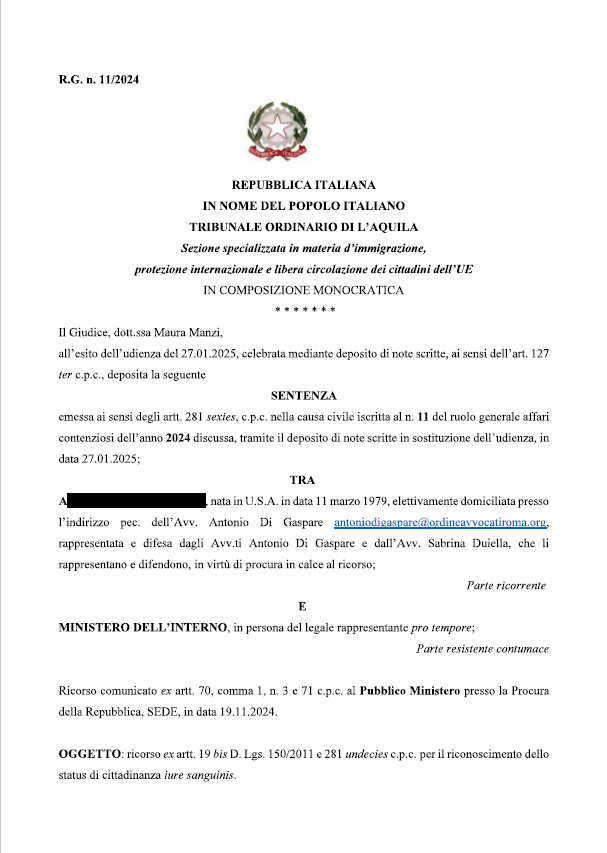
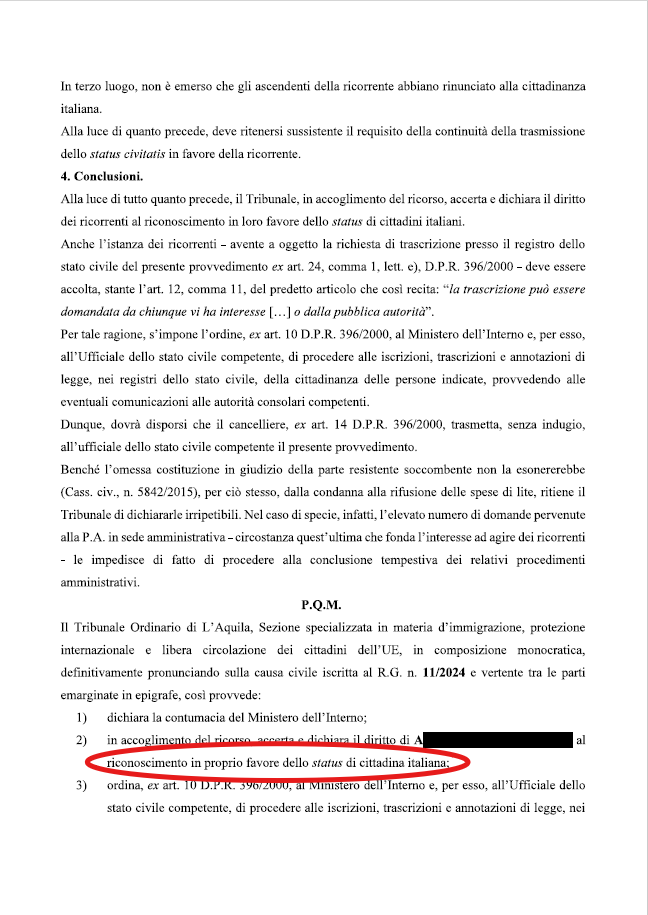
The Court of L’Aquila
by descent since she had an Italian-born grandfather.
An important aspect of this case is that the Court acknowledged how the exceptionally high
volume of applications pending before the Italian authorities effectively prevents timely
administrative processing—thereby establishing the client’s legitimate interest in seeking
judicial relief.
The Court of Messina
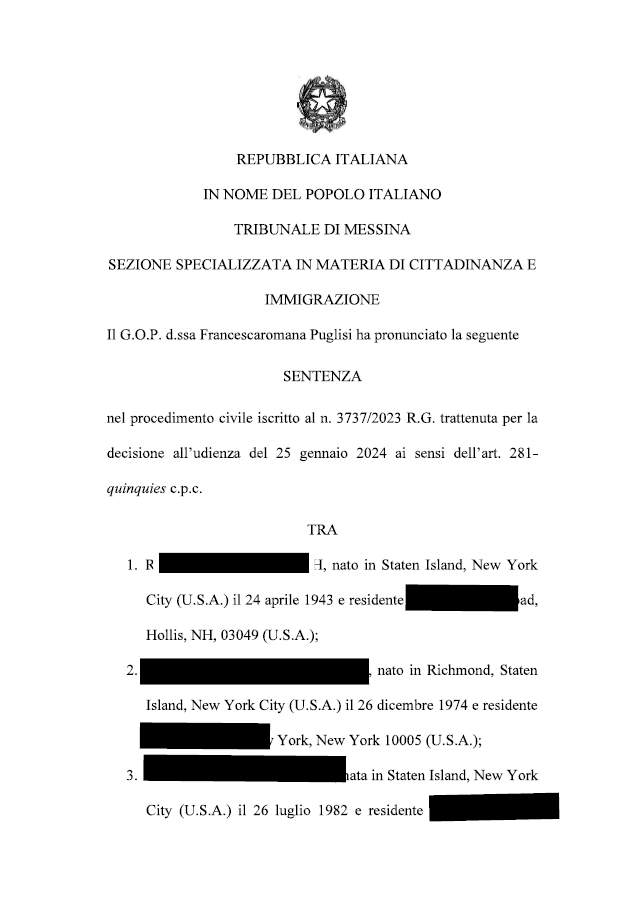
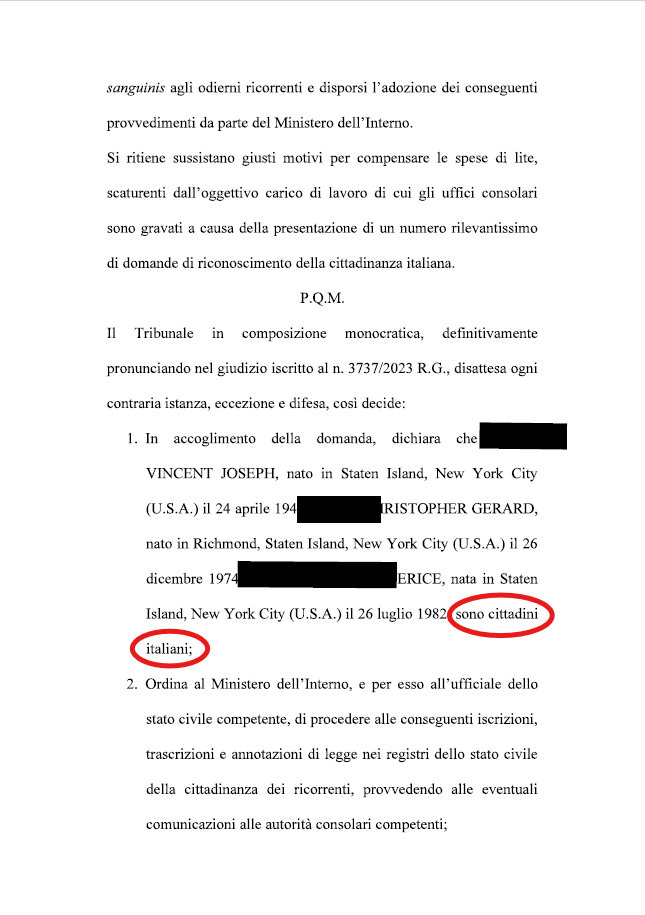
The Court of Messina (RIZZO) recognized our 3 clients based in New York the Italian
citizenship iure sanguinis since their grandparent was an Italian citizen.
In its reasoning, the Court recalled that, although Italian law formally requires administrative
citizenship procedures to be concluded within 730 days, in practice Italian Consulates in the United
States often take many years—sometimes over a decade—due to overwhelming backlogs.
Following the approach of other Italian courts, the Judge held that such excessive delays amount
to a de facto denial of the right and therefore justify bringing the case directly before the courts,
especially where, as in this case, the applicants had already been placed on a consular waiting list
with thousands of people ahead of them.
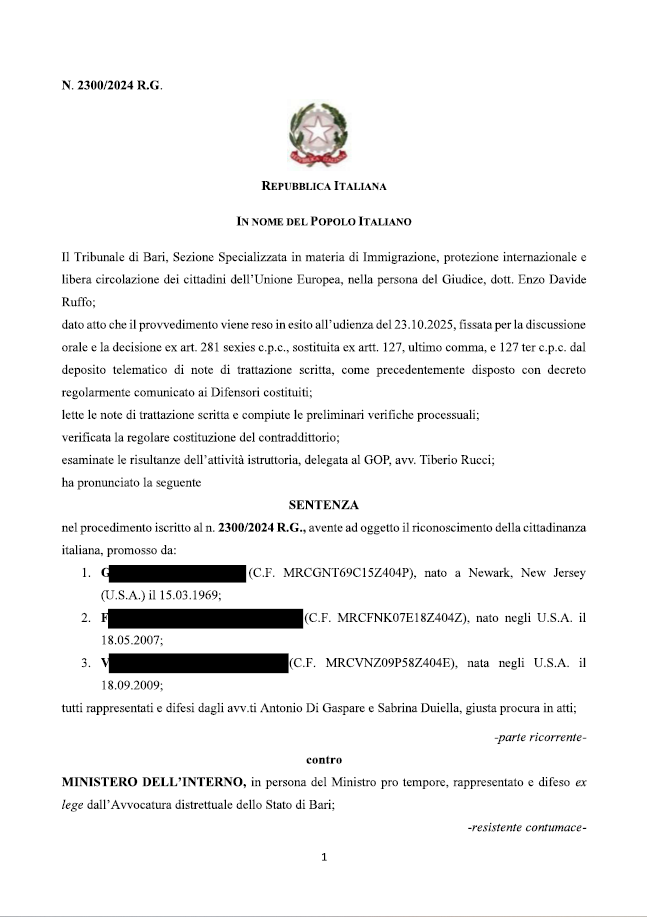
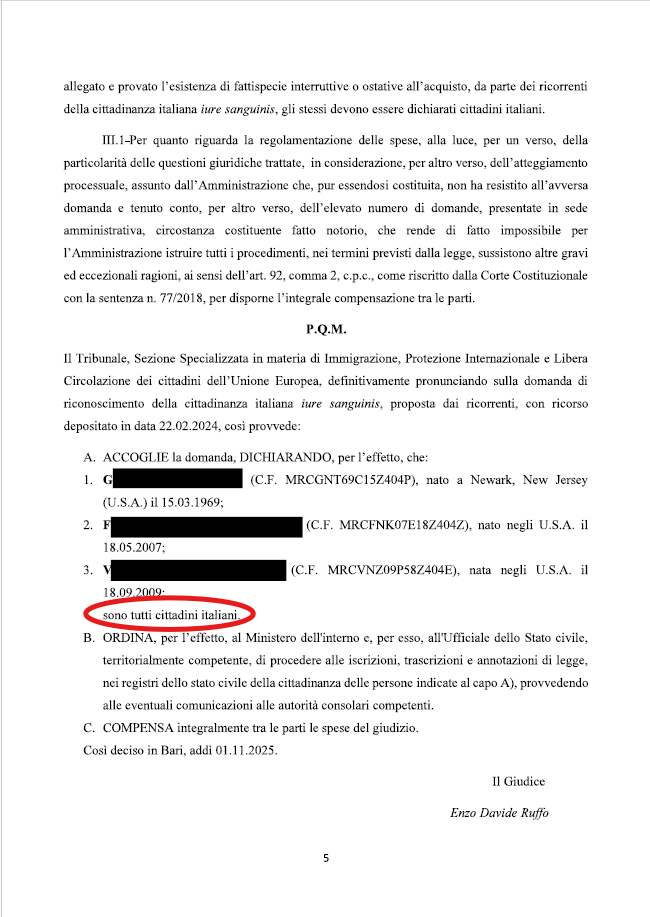
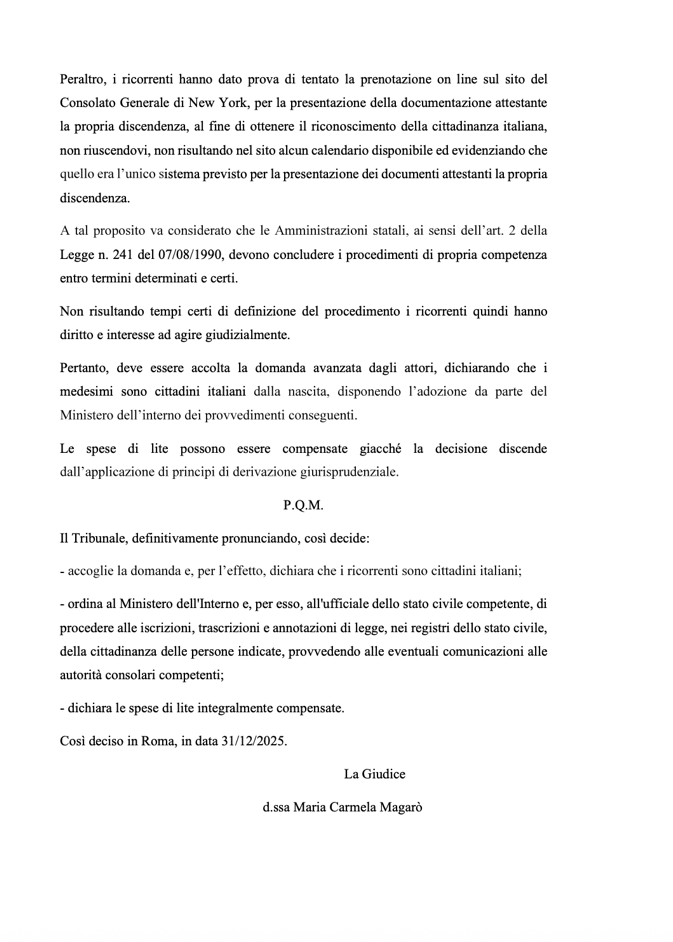
The Court of Bari
citizens, confirming their proven lineage from their Italian-born ancestor, ordering the
registration of their citizenship status in the Italian civil registry.
In its reasoning, the Court emphasized that, since the Administration had neither alleged nor
demonstrated the existence of any interruptive or prohibitive circumstances, the applicants’
right to Italian citizenship had to be fully recognized.
The Court of Turin
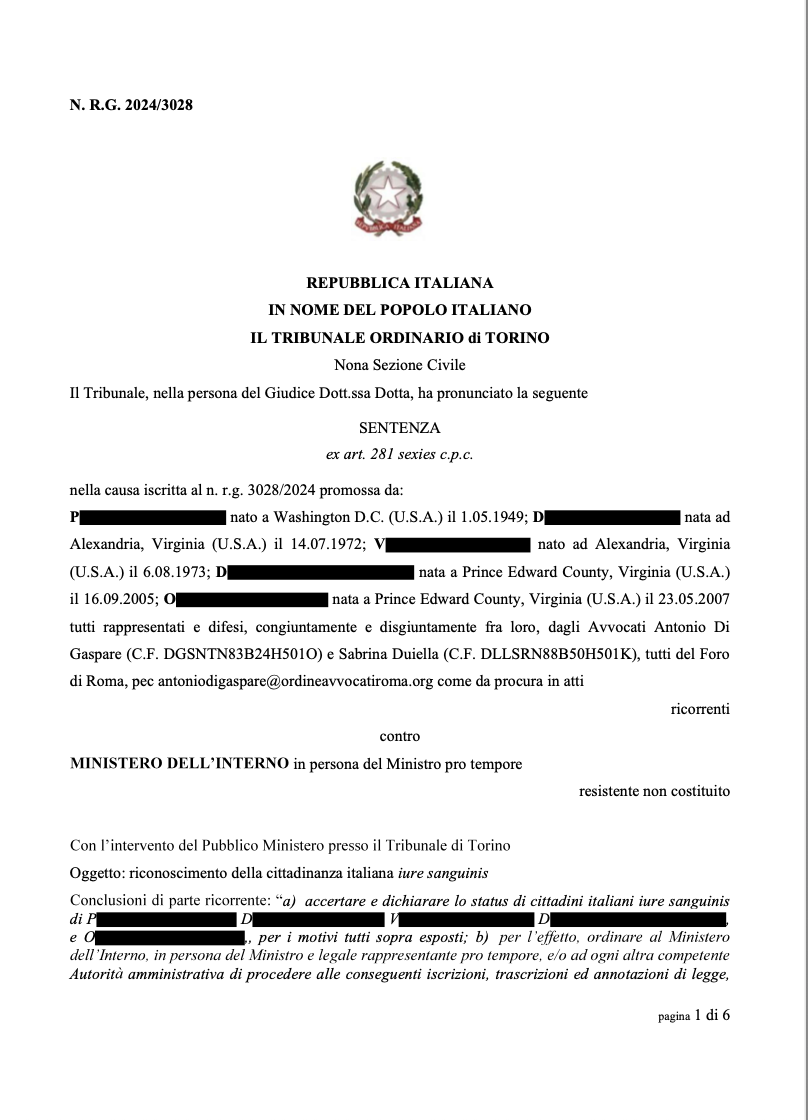
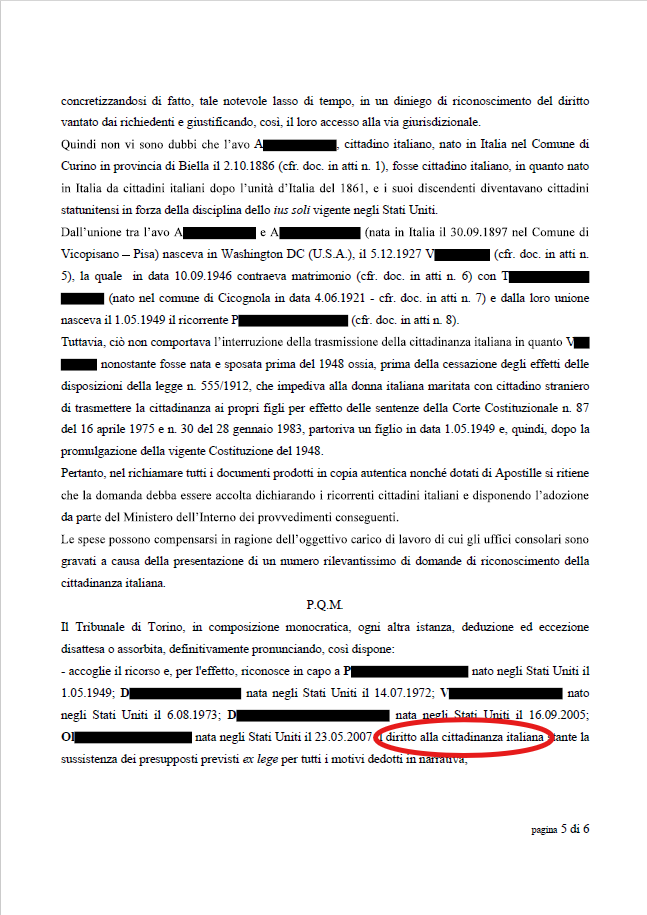
The court of Turin (MAGNINI) recognized our clients, based in New York, the Italian
citizenship by descent, confirming their direct Italian ancestry through both paternal and maternal lines and ordering the registration of their citizenship status in the Italian civil
registry.
In its reasoning, the Court observed that, although citizenship recognition should in principle be
obtained administratively before the Ministry of the Interior or the Italian Consulate in the country of
residence, the notoriously long waiting lists at the Italian Consulate in the United States effectively
amount to a denial of the right—thereby confirming the clients’ legitimate interest in turning to the
courts for relief.
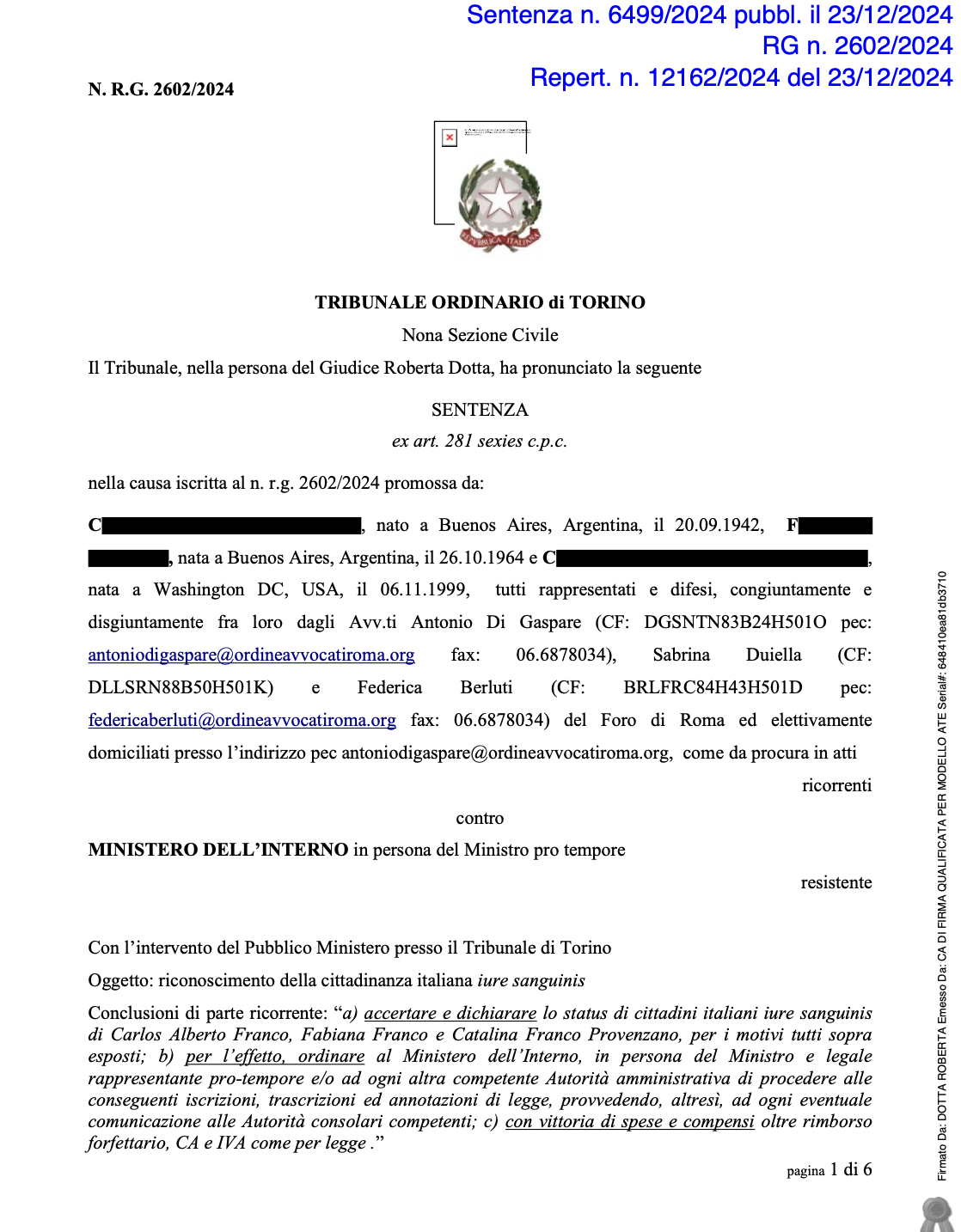
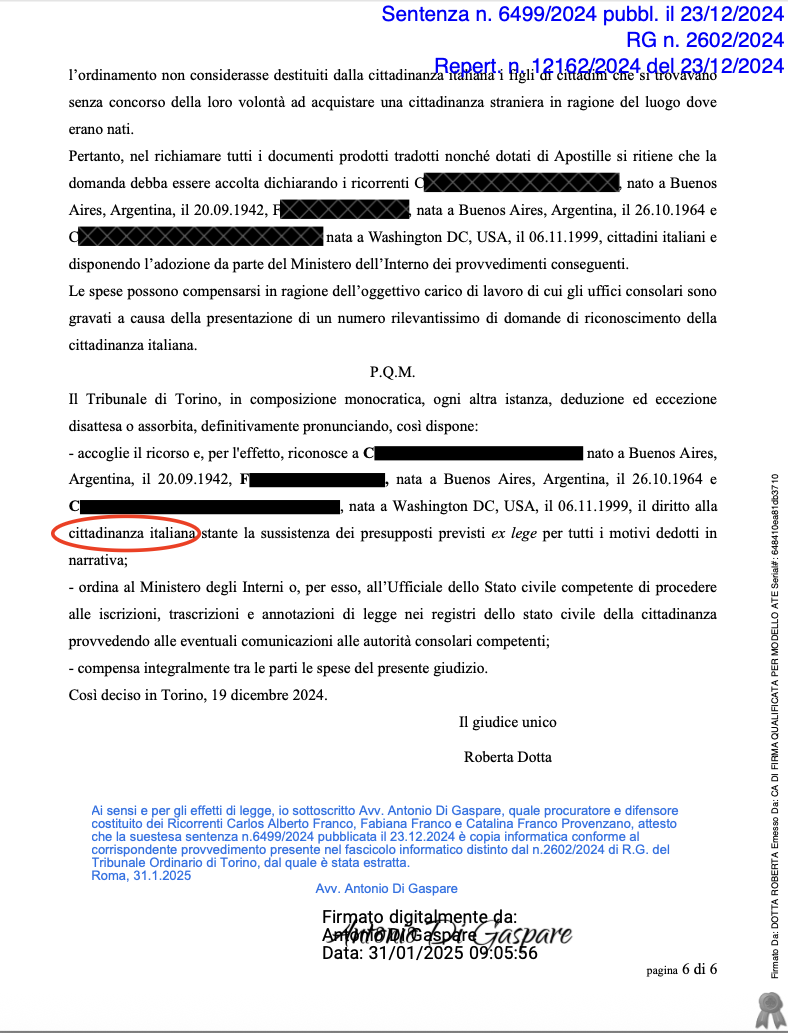
The Court of Turin
As the Court clarified in the reasoning, Italian citizenship is not lost when a descendant automatically acquires a foreign nationality at birth, as this involuntary acquisition—solely due to the jus soli rules of the country of birth—does not interrupt the transmission of Italian citizenship.
The Court of Messina
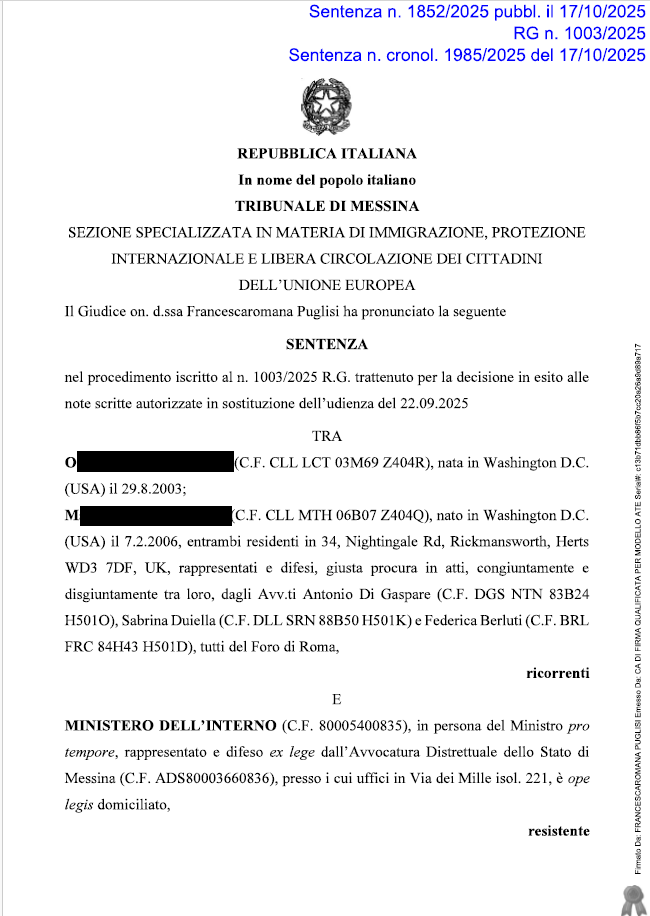
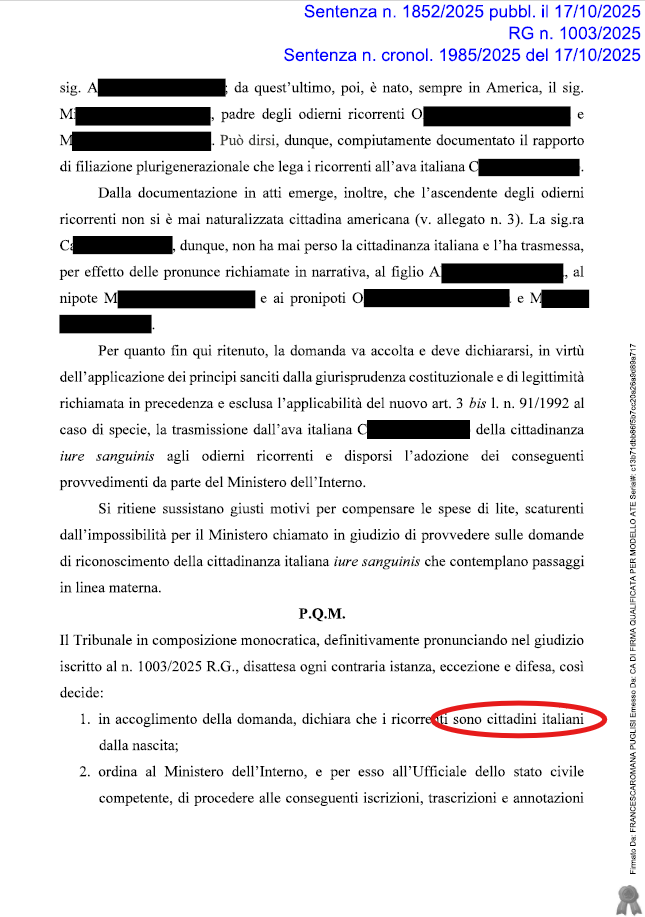
our two clients residing in the United Kingdom, confirming their uninterrupted
lineage from their Italian-born ancestor and ordering the registration of their vital
records in the Italian citizenship registers.
In its reasoning, the Court emphasized that, because the family line included pre-1948
maternal passages, the clients could not realistically obtain recognition through the
Consulate—bound to apply only the literal text of the old statutes—so judicial proceedings
were the appropriate and necessary avenue to have their citizenship rights fully
recognized..
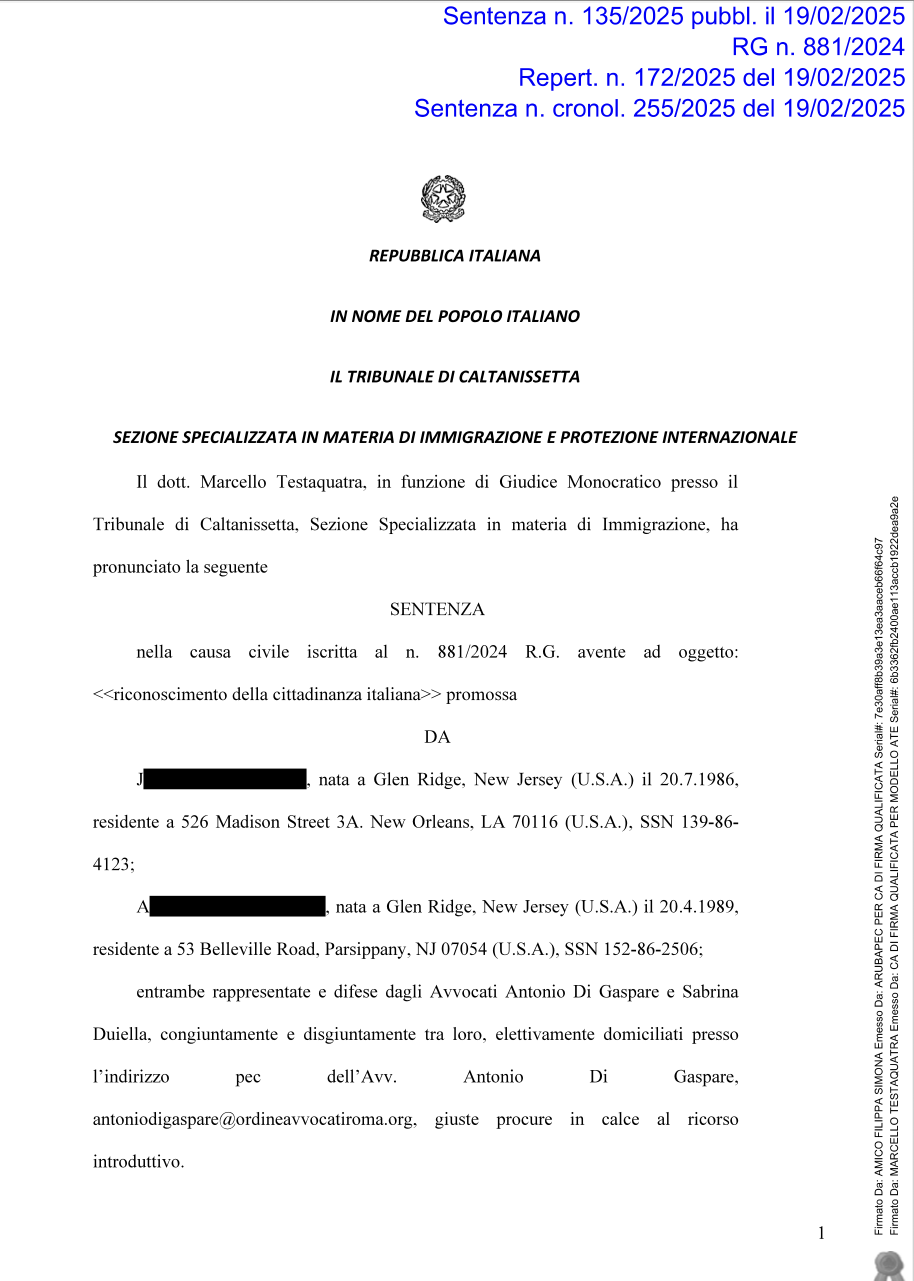
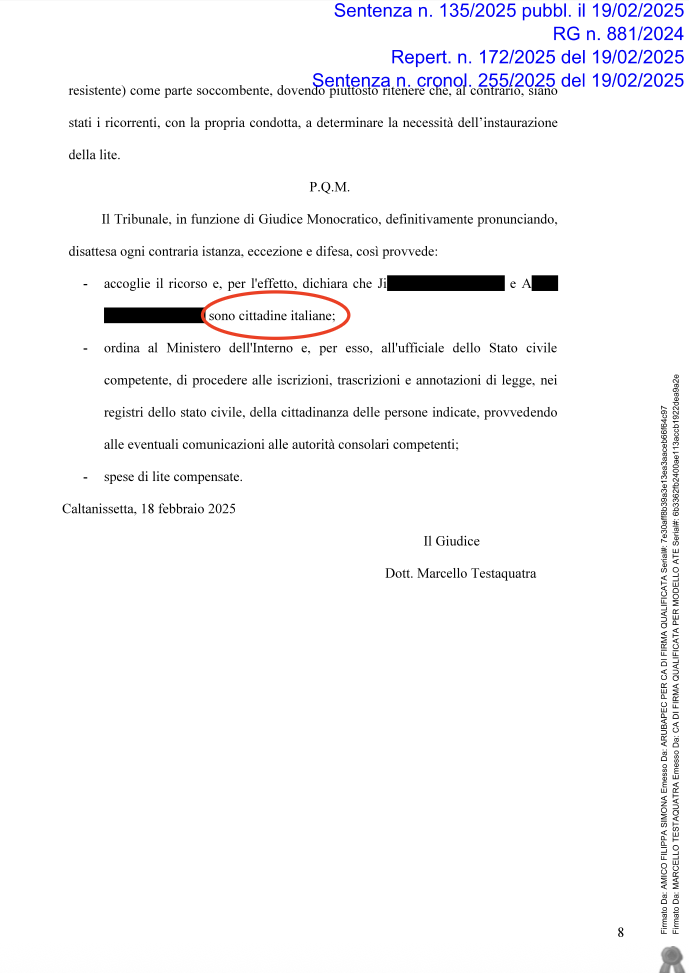
The Court of Caltanissetta
clients residing in New Jersey and Louisiana, confirming their direct lineage from their
ancestor born in Agira (Enna) and ordering the registration of their citizenship status in the
Italian civil registry.
The Court stressed that the prolonged uncertainty and unreasonable delay in handling their
consular applications effectively amounted to a denial of their right to citizenship, thereby justifying
judicial intervention, and further clarified that the administrative route is not a mandatory
precondition for bringing a citizenship claim before the courts.
The Court of Caltanissetta
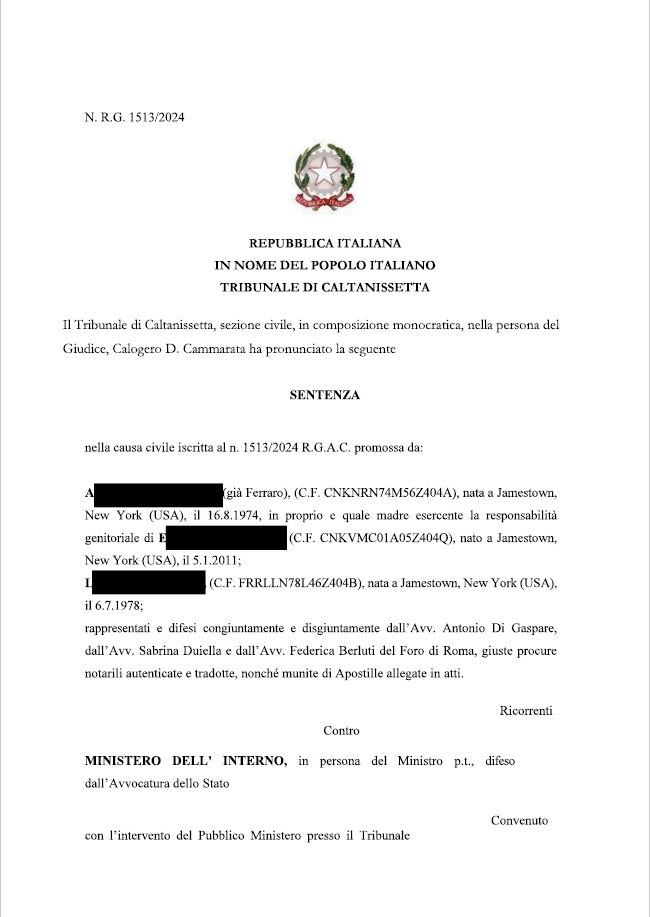
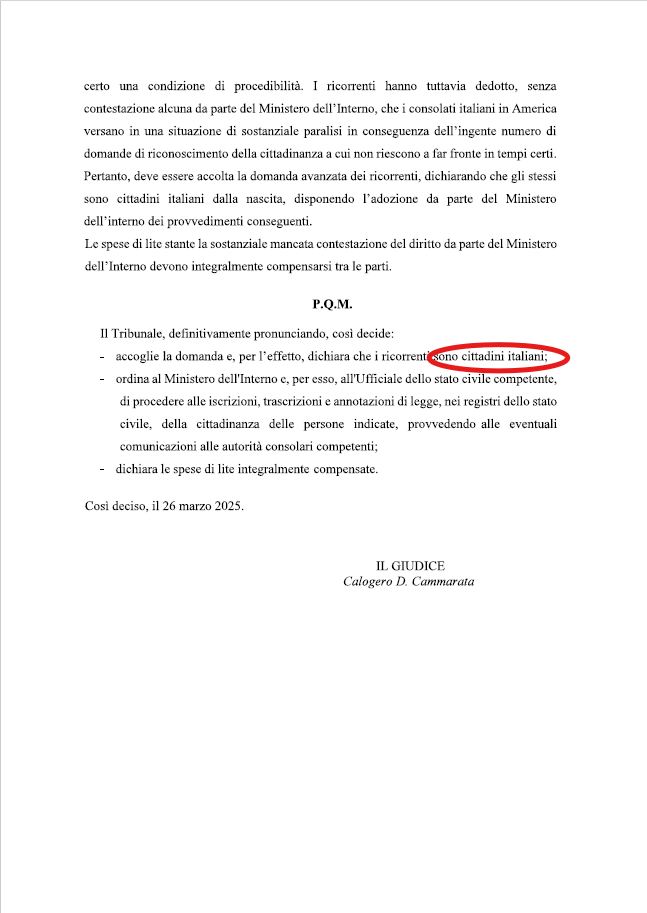
The Court of Caltanissetta (FERRARO) recognized our three clients—residents of New York (USA)—as Italian citizens iure sanguinis through their direct paternal descent from their Italian-born ancestor from San Cataldo (Caltanissetta).
The Court further clarified that applicants are free to seek judicial recognition of citizenship without first completing the administrative procedure and, in light of the severe backlog and de facto paralysis affecting Italian Consulates in the United States, held that our clients were entitled to be recognized as Italian citizens from birth, ordering the Ministry of the Interior to take all consequent steps.
The Court of Rome
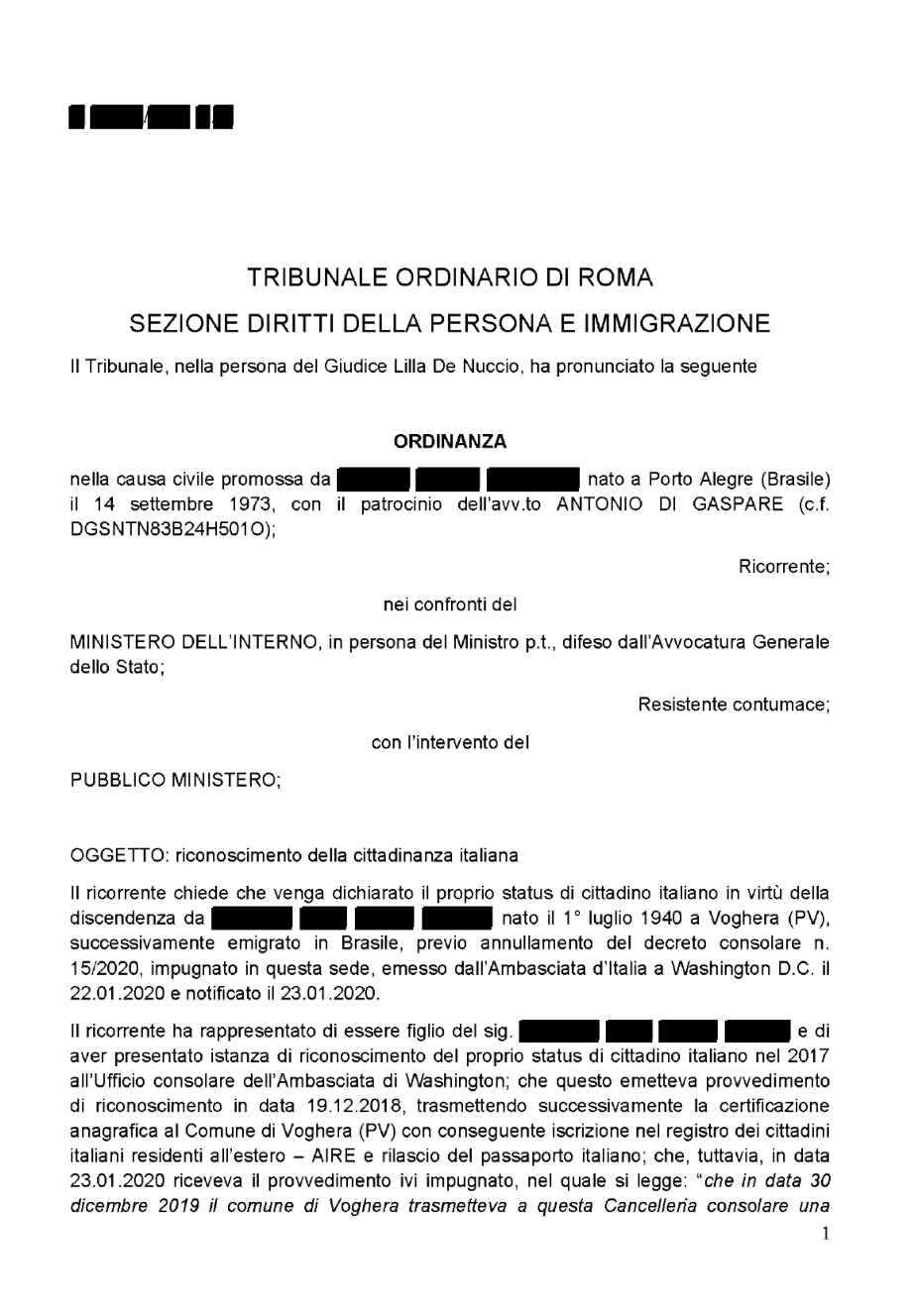
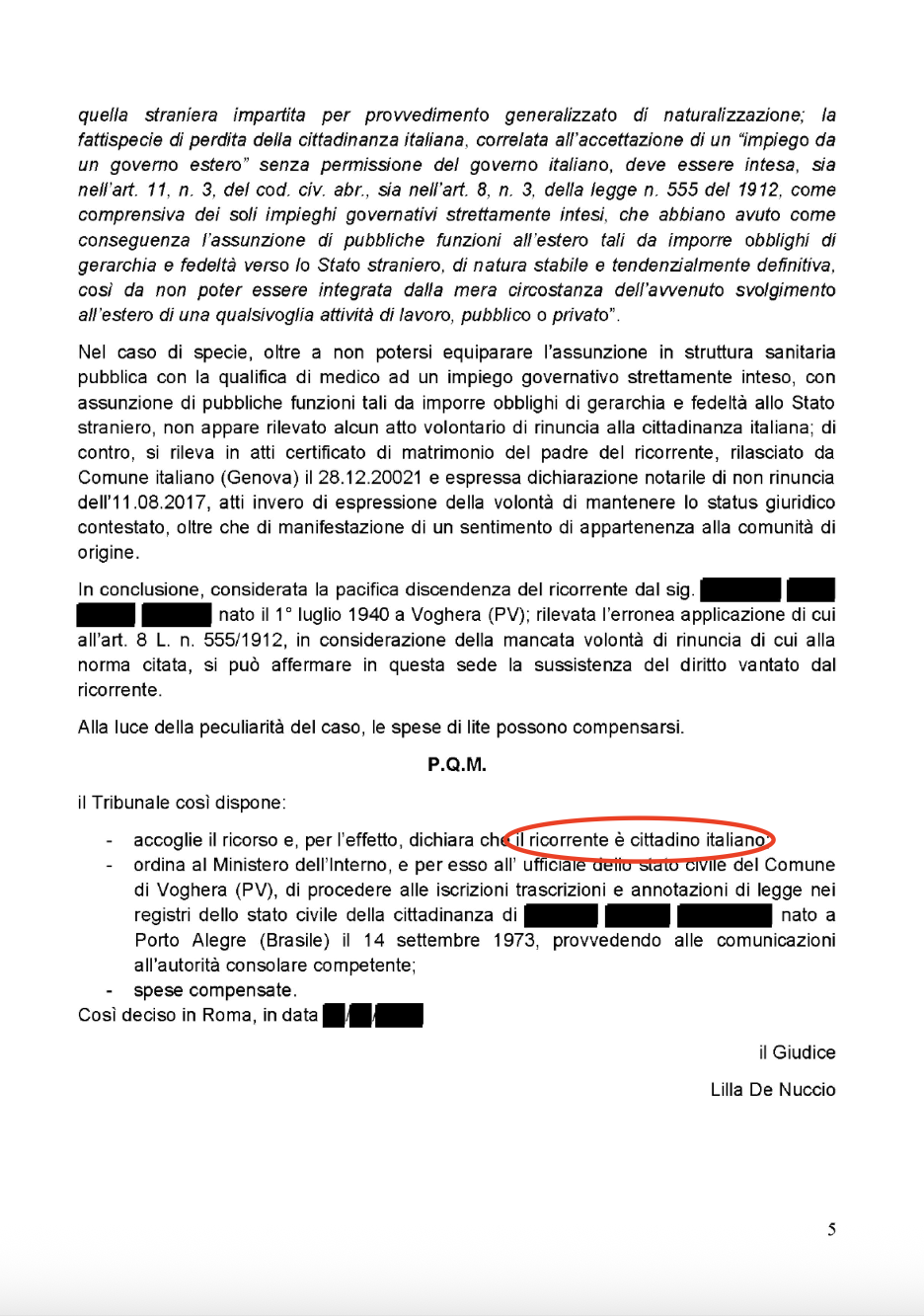
In recognizing our client’s citizenship, the Court noted that Article 8 of Law 555/1912 had been incorrectly applied, as there was no voluntary renunciation of Italian citizenship—thereby confirming the client’s rightful claim to citizenship.
The Court of Florence
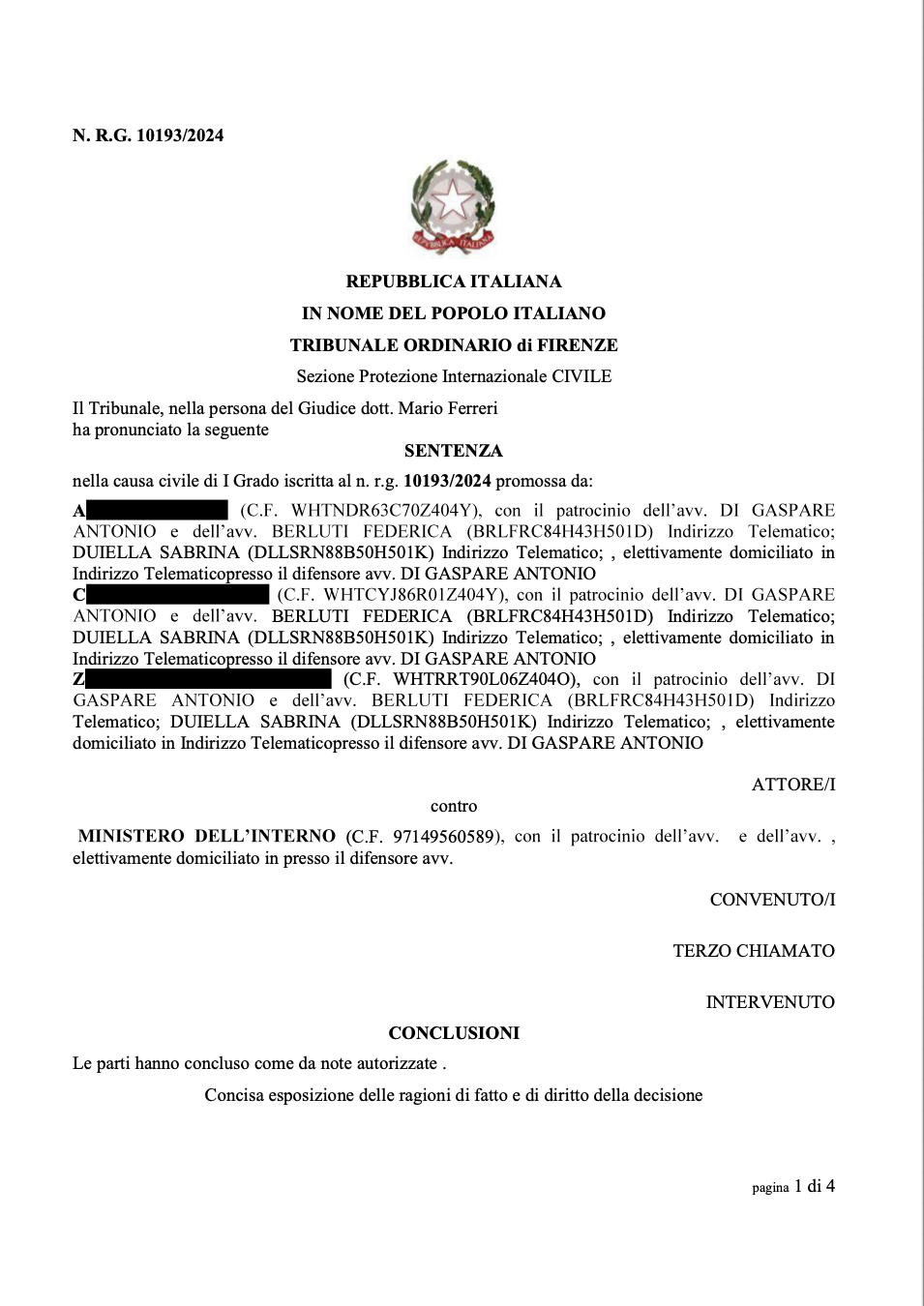
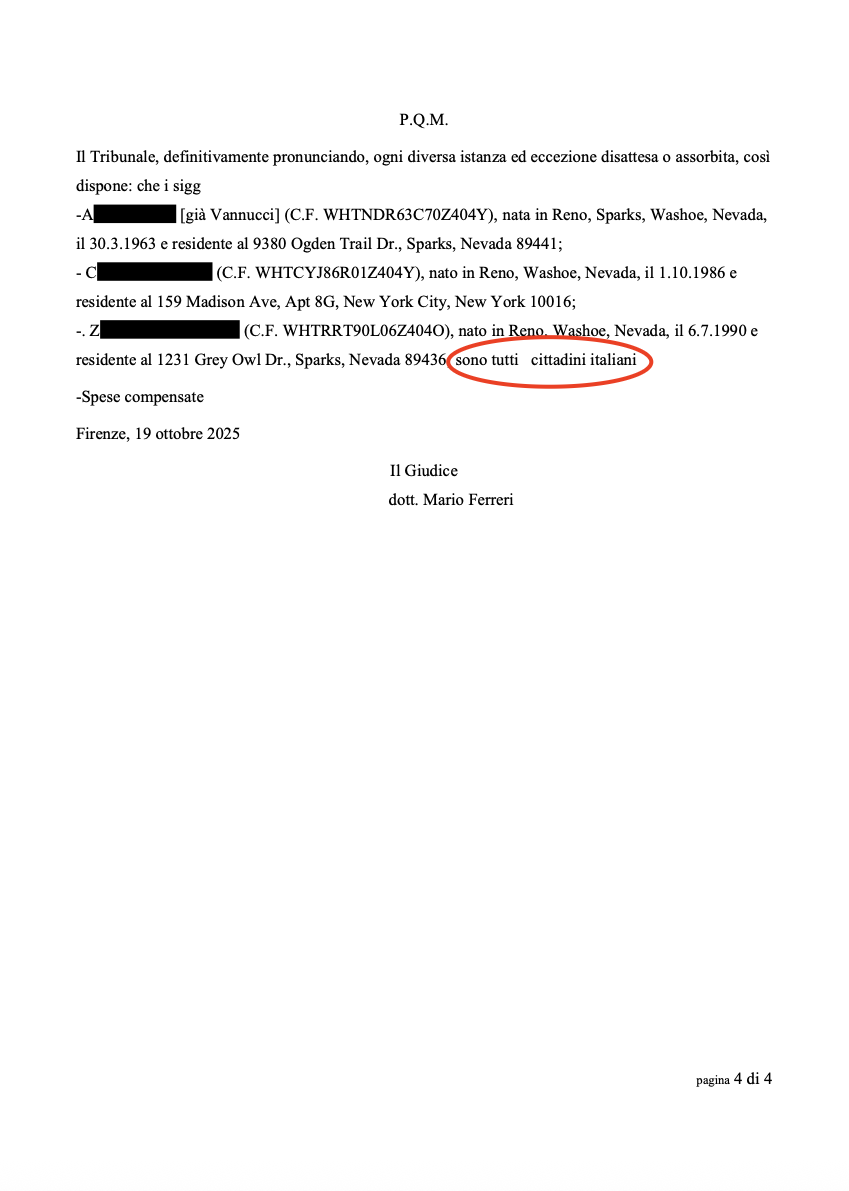
The Court found that the Italian ancestor had never lost his Italian citizenship, nor had any of his descendants, as no voluntary renunciation or conduct implying such renunciation was ever shown—consistent with the Supreme Court’s guidance (Cass. SS.UU., 24 August 2022, no. 25317).
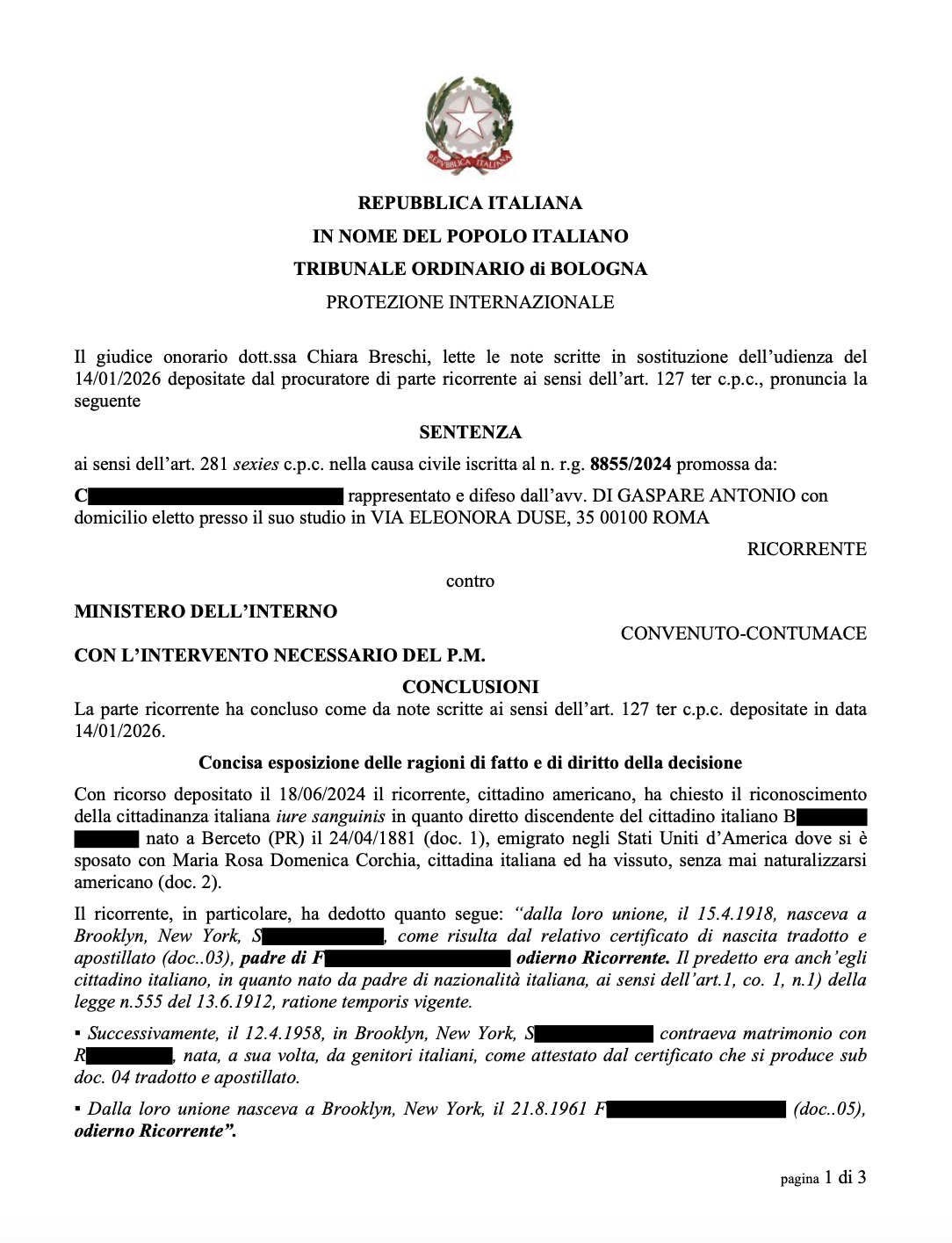
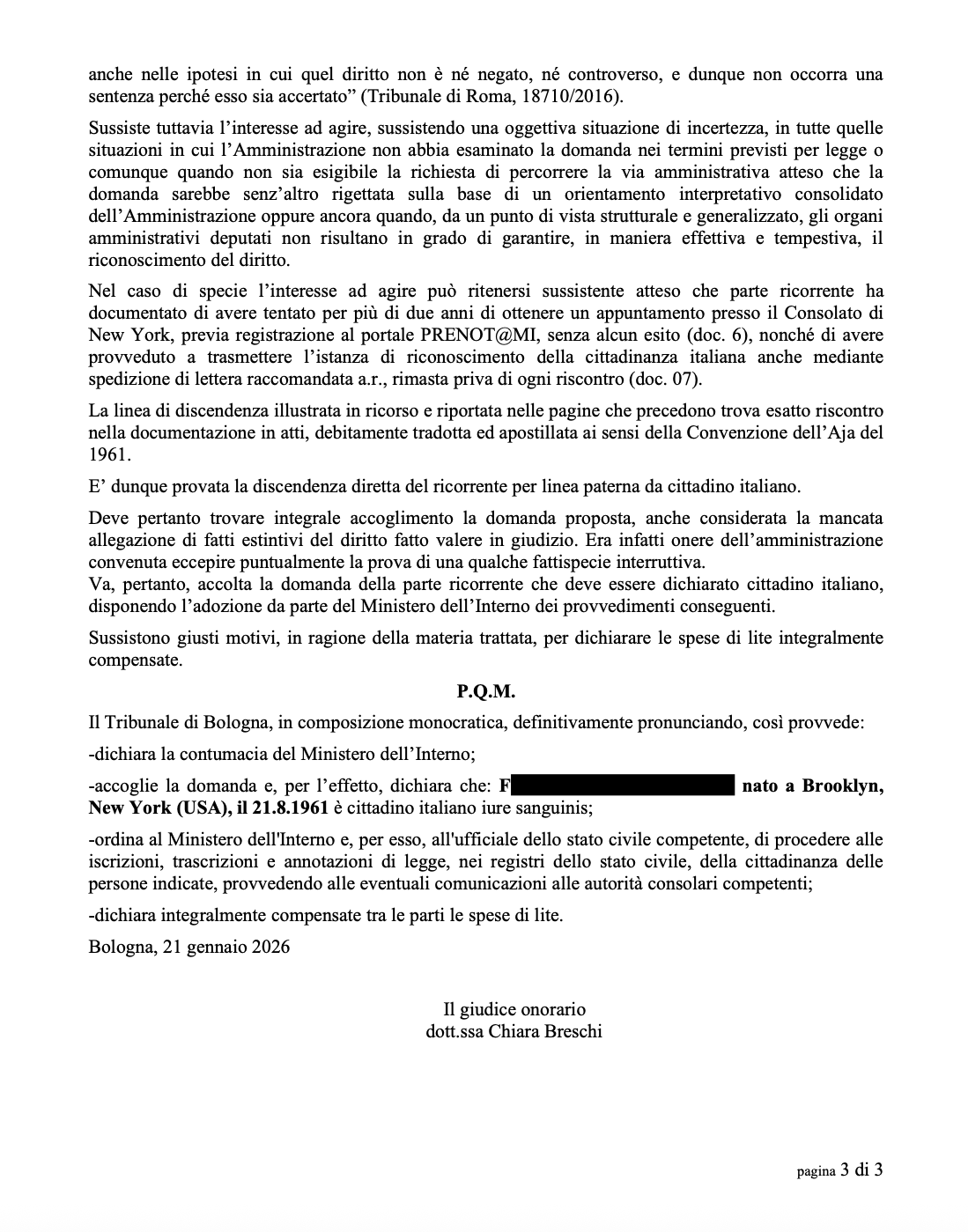
The Court of Bologna
The Court confirmed that the applicant qualified through his Italian-born grandfather, who emigrated to the United States and never naturalized, and ordered the Ministry of the Interior to proceed with all required civil status registrations, transcriptions, and annotations, including communications to the competent consular authorities.Importantly, the application was filed prior to March 2025 and was therefore not subject to the restrictive provisions introduced by Decree-Law No. 36/2025 (now Law No. 74/2025), which significantly limit the recognition of Italian citizenship to applicants with at least one Italian-born parent or grandparent, marking a major departure from the long-standing interpretation that allowed claims through more distant ancestors.
The Court of Palermo
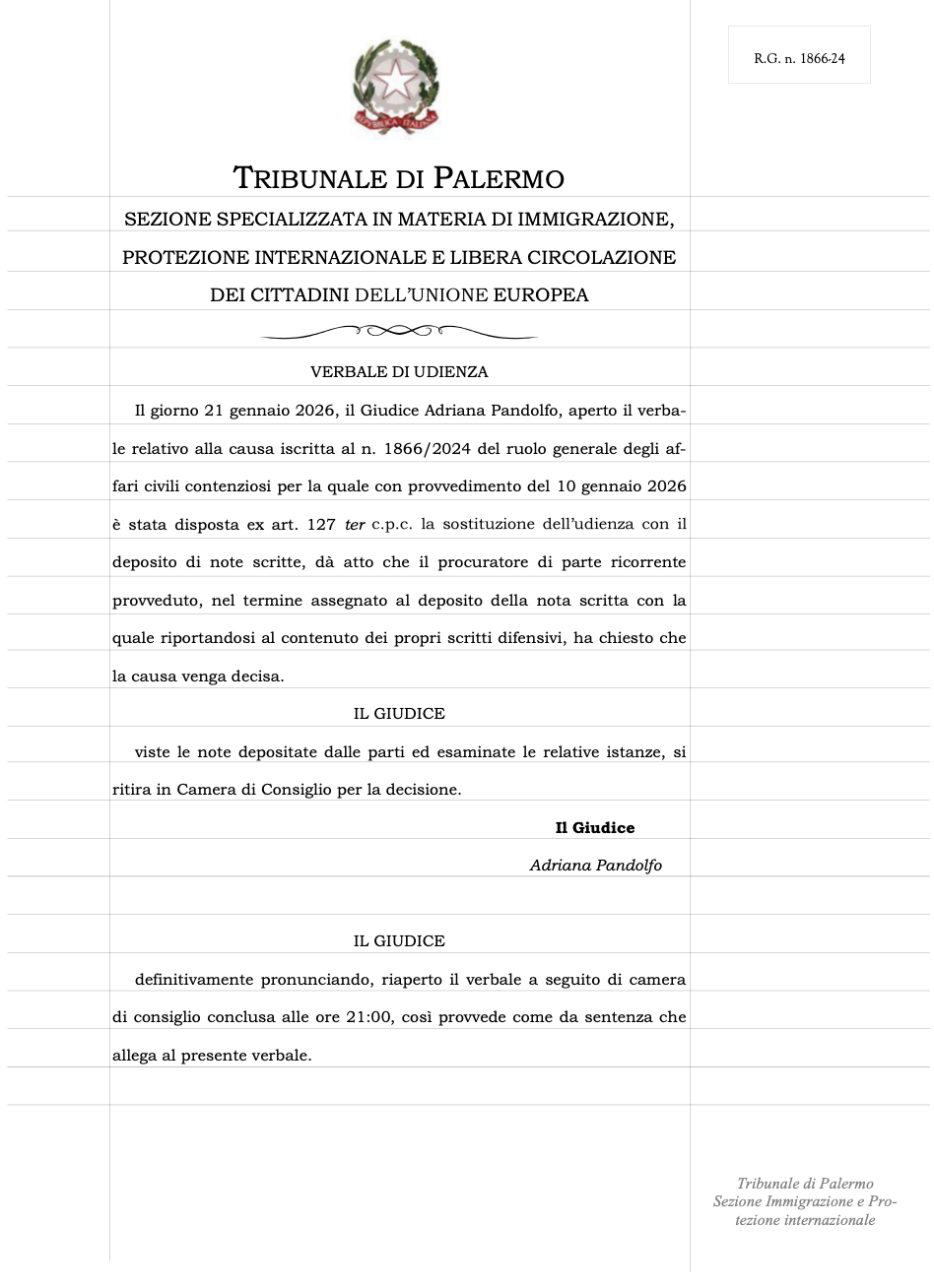
The Court confirmed that the applicant qualified through his Italian-born father, who emigrated to the United States and never naturalized as a U.S. citizen, thereby preserving the uninterrupted transmission of Italian citizenship under Law No. 555/1912. The Tribunal ordered the Ministry of the Interior to carry out all required civil status registrations, transcriptions, and annotations, including communications to the competent consular authorities.
The Court also expressly acknowledged the systemic delays and inaccessibility of consular appointment systems, holding that prolonged waiting times and the impossibility of booking an appointment constitute an implicit denial of rights and justify direct judicial action.
As the application was filed prior to March 2025, the case was not subject to the restrictive provisions introduced by Decree-Law No. 36/2025 (now Law No. 74/2025), which significantly limit the recognition of Italian citizenship to applicants with at least one Italian-born parent or grandparent, marking a substantial departure from the previous legal framework that allowed recognition through more remote ancestors.
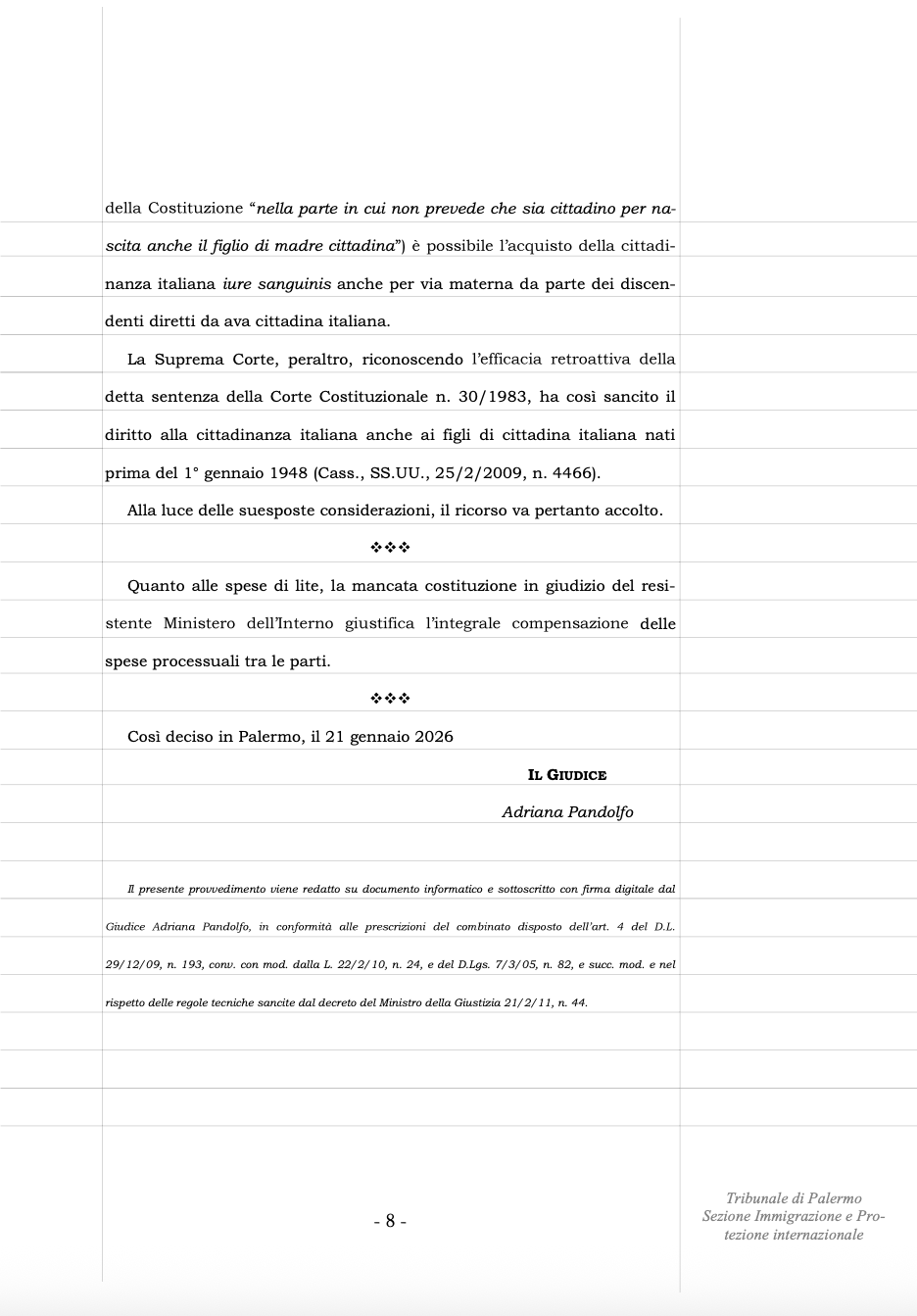
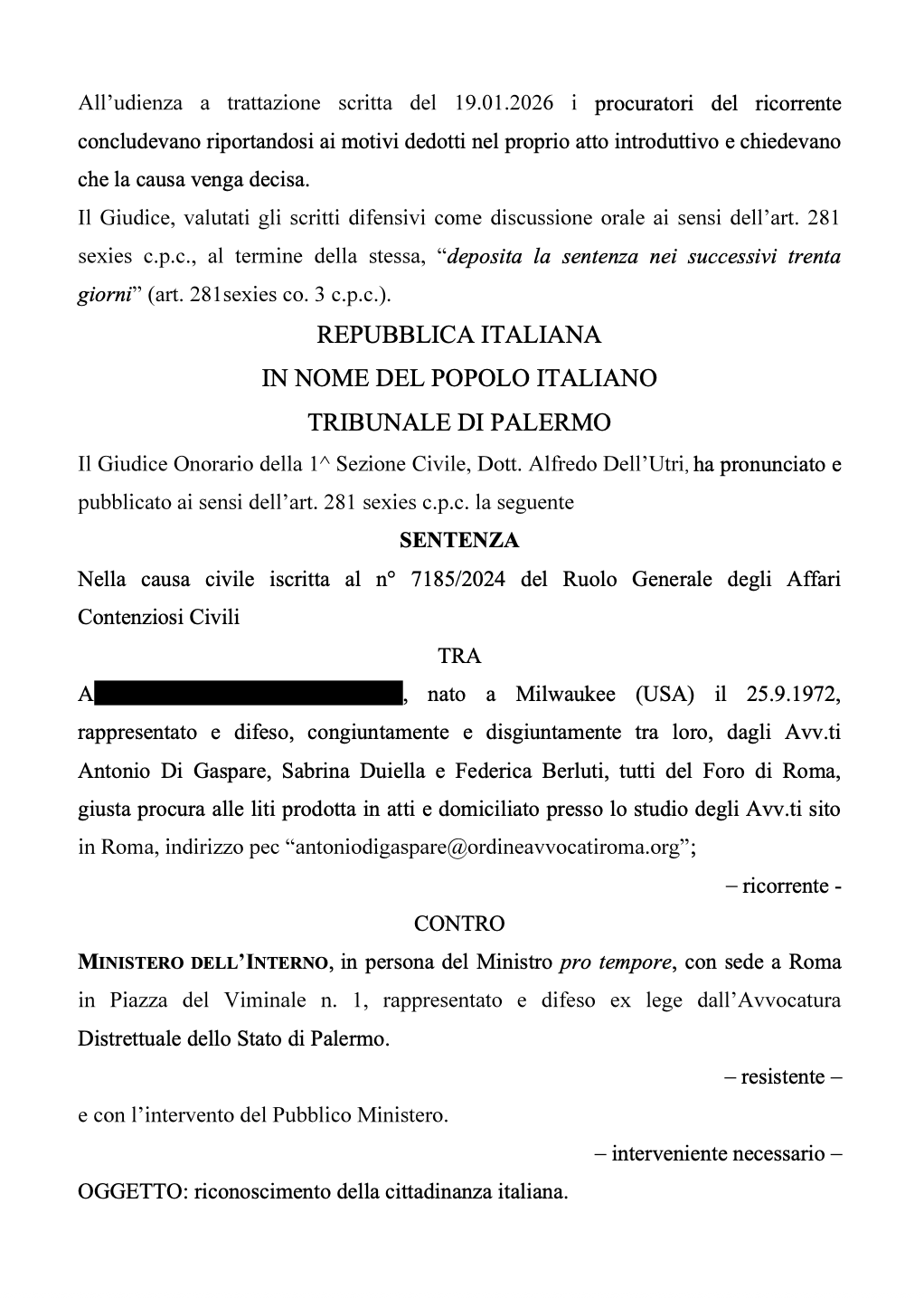
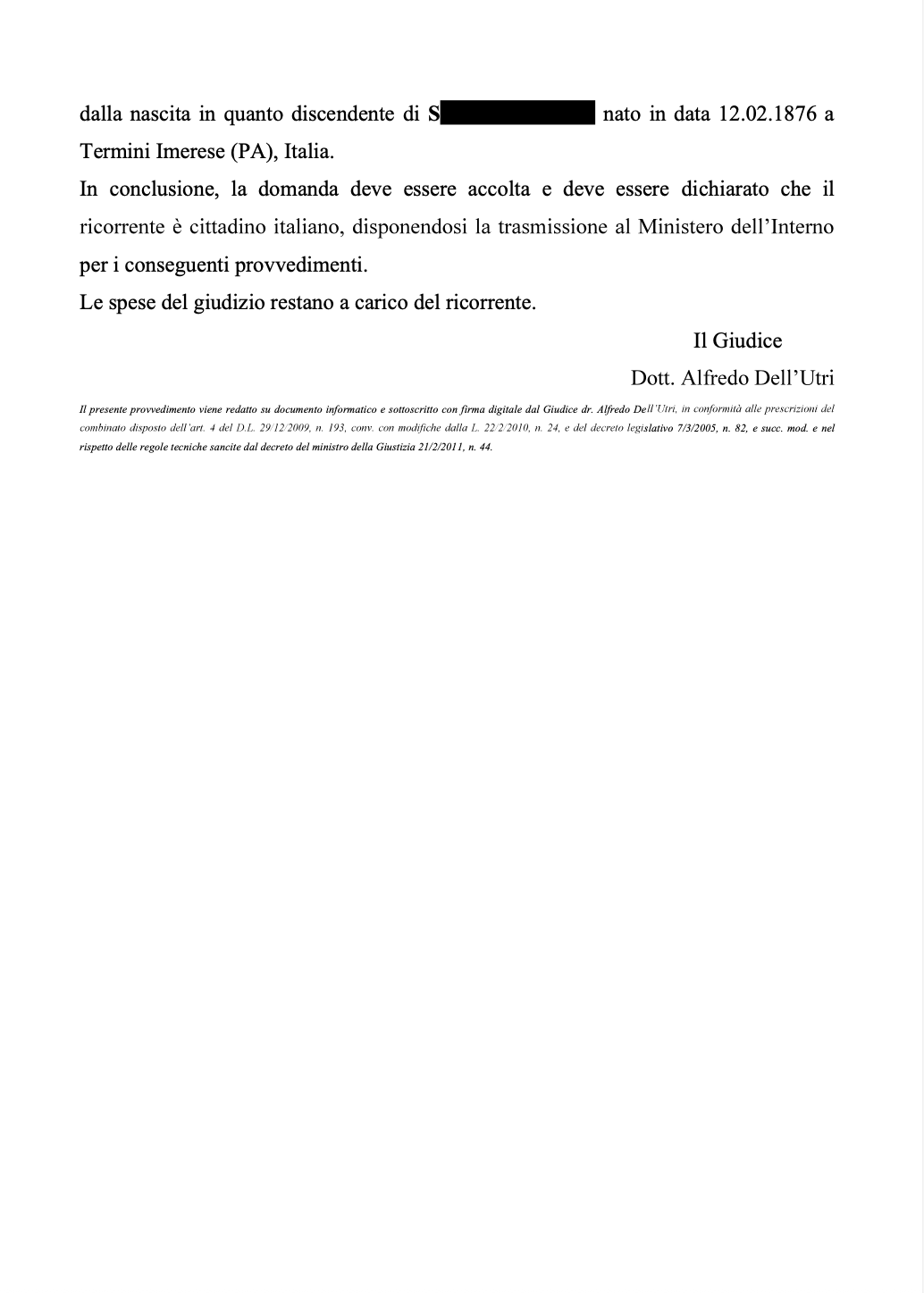
The Court of Palermo
The Court confirmed that the applicant qualified through his Italian-born great-grandfather, born in Termini Imerese (Palermo) in 1876, and reconstructed the uninterrupted line of transmission through the maternal line, expressly applying the constitutional principles established by Constitutional Court judgments no. 87/1975 and no. 30/1983, which removed gender-based discrimination in the transmission of Italian citizenship.
The Tribunal reaffirmed that Italian citizenship acquired jure sanguinis is a permanent, imprescriptible status, enforceable at any time upon proof of descent, and held that the documentary evidence fully established the applicant’s right to recognition.
As the application was filed prior to March 2025, the case was not subject to the restrictive provisions introduced by Decree-Law No. 36/2025 (now Law No. 74/2025), which significantly limit the recognition of Italian citizenship to applicants with at least one Italian-born parent or grandparent, marking a substantial departure from the prior legal framework that allowed recognition through more remote ancestors.
The Court of Palermo
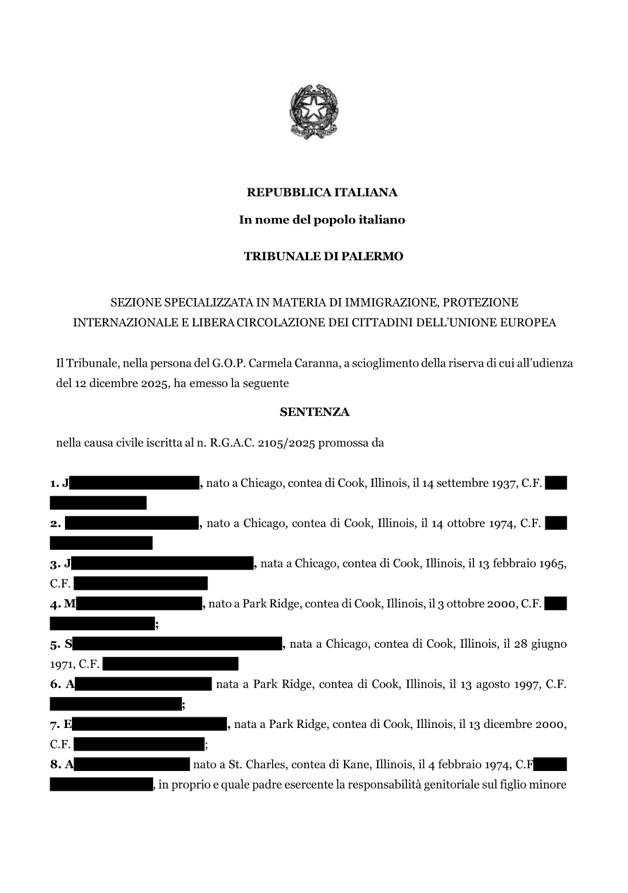
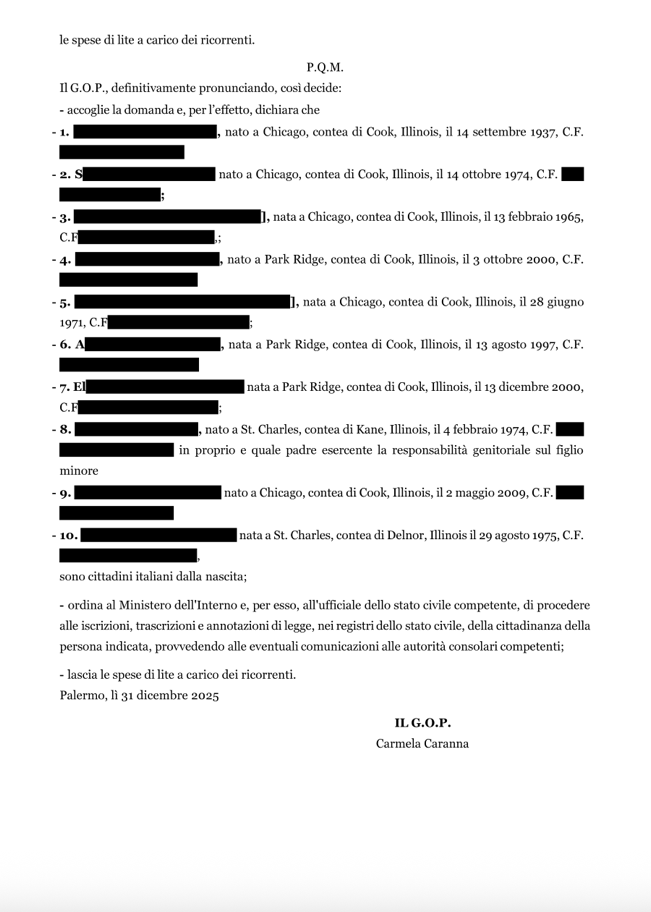
The Court affirmed that the lineage was clearly proven through documentation (complete with apostilles and translations) and that there was no evidence of a formal renunciation of Italian citizenship by the ancestor or his descendants. Furthermore, the judge reiterated that judicial intervention was justified as the claimants were unable to obtain recognition through administrative channels, and established that the right to citizenship was fully met given the absence of any facts that would terminate such a right.
The Court of Napoli
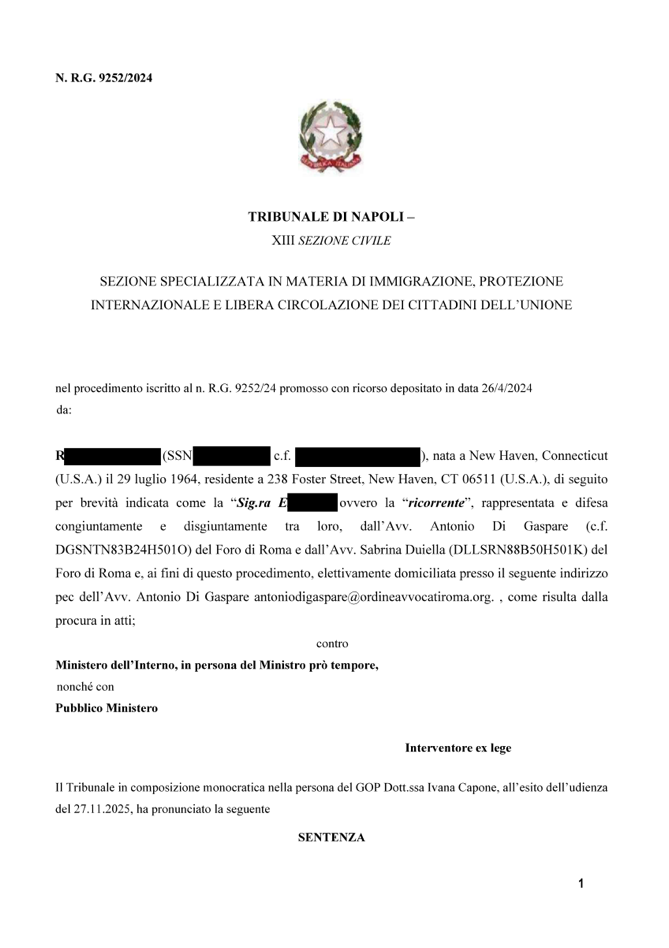
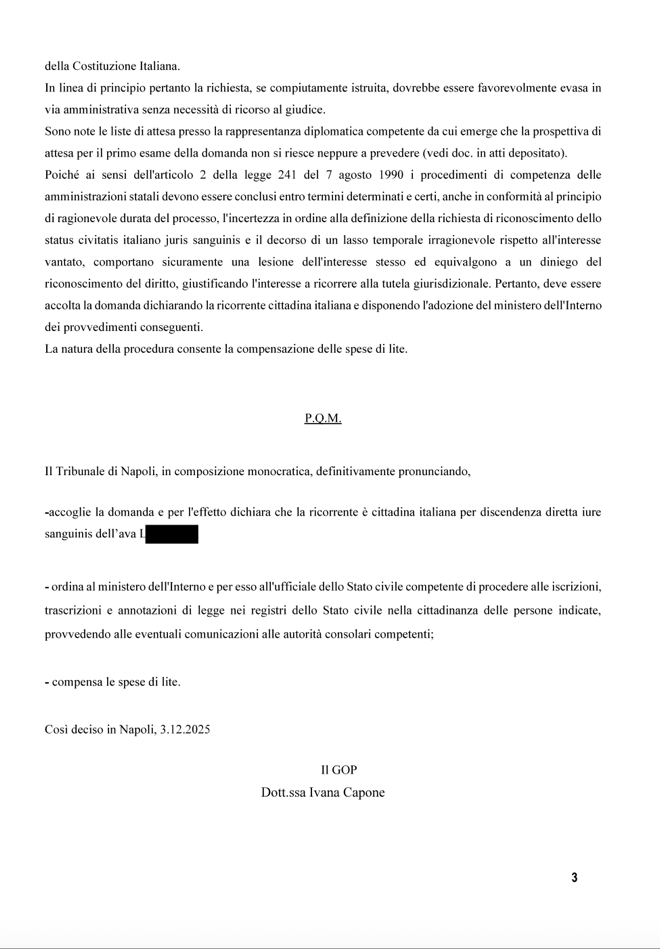
The Court stressed that the documented direct lineage from the Italian ancestor was clearly established and that the ancestor had never naturalized as a U.S. citizen nor renounced Italian citizenship. Furthermore, the judge highlighted that the excessive and unpredictable waiting times at the competent consulate constitute a violation of the legal obligation to conclude administrative procedures within a reasonable timeframe. This uncertainty effectively amounts to a denial of the right to citizenship, thereby justifying the client’s interest in seeking judicial intervention.
The Court of Bari
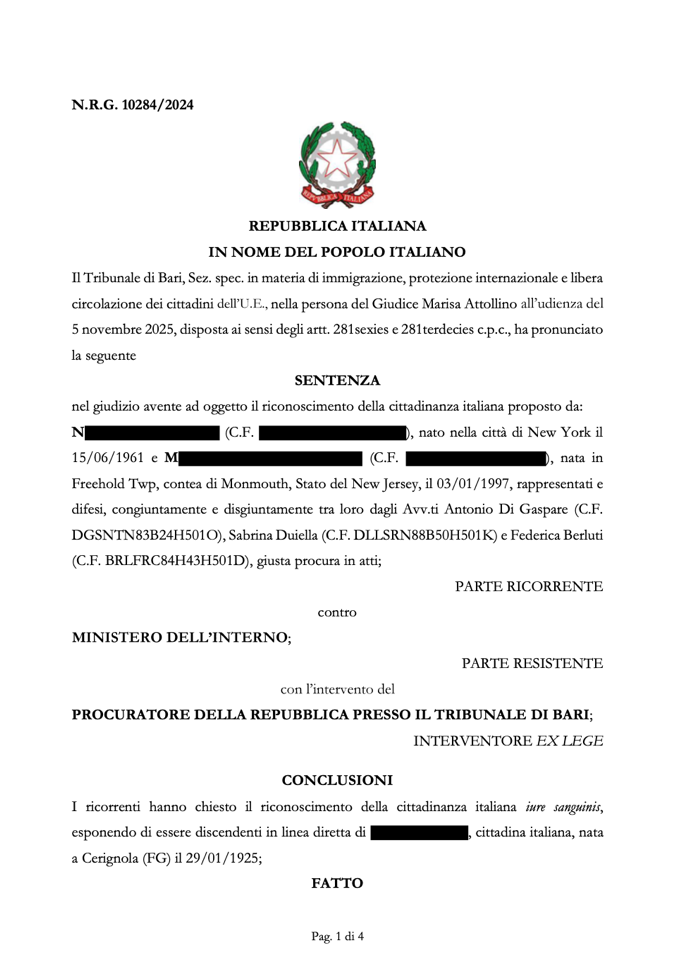
The Court established that the right to citizenship is a permanent and imprescriptible status. It specifically addressed the transmission of citizenship through the female line, citing Constitutional Court rulings that overturned discriminatory laws previously preventing women from passing their citizenship to their children. Furthermore, the judge clarified that judicial intervention was justified following the silence of the public administration , ruling that the documented lineage was fully proven and that no formal renunciation of citizenship had occurred.
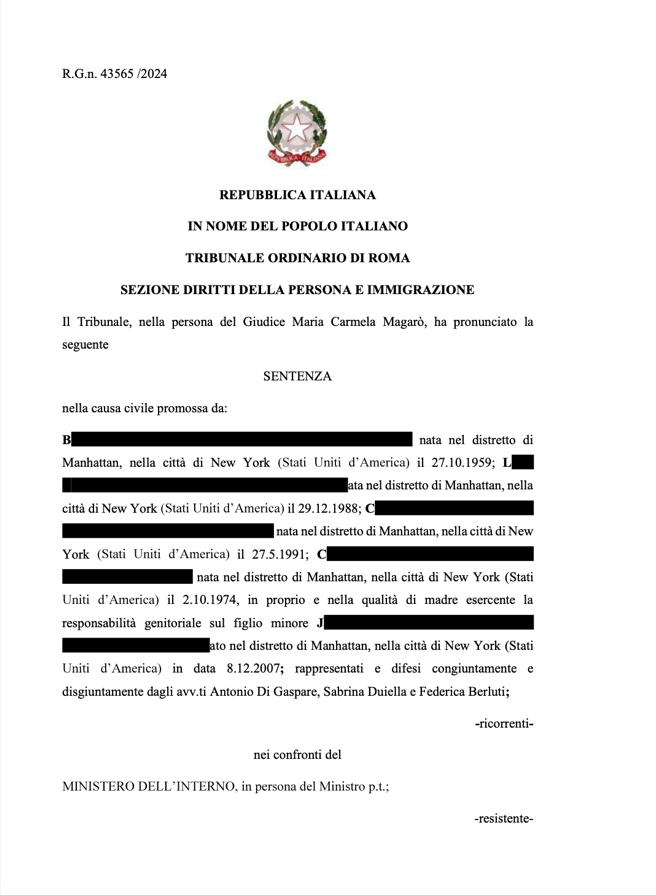
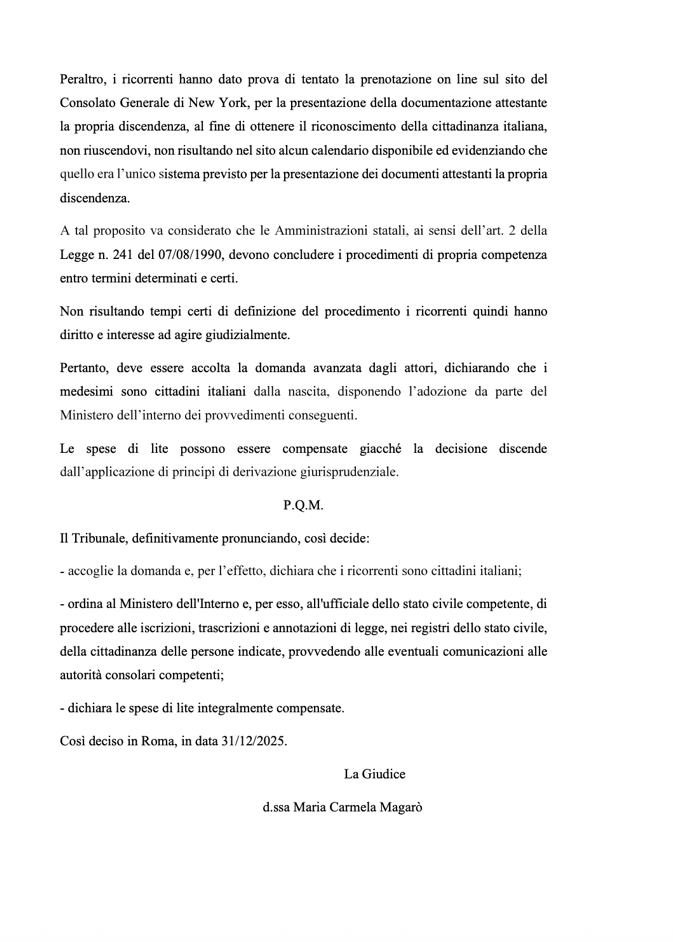
The Court of Roma
The Court declared that the claimants are Italian citizens by birth, successfully challenging the
historical limitations of citizenship transmission through the female line. The judge applied the
landmark principles established by the Constitutional Court and the Court of Cassation, which
rectified past discriminatory laws that prevented Italian women from passing citizenship to their
children or caused them to lose it upon marriage to a foreigner. Furthermore, the Court
emphasized that judicial intervention was justified due to the lack of available appointments
and certain timelines within the administrative process, which constitutes an interest in seeking
judicial protection.
CONTACT US
Fast-Track Video Consultation with Consultants: Receive timely guidance on how to apply for Italian citizenship within 48 hours. Book your consultation with our team for $75. Please send an email to info@italiancitizenshiplawfirm.com.
Free Italian Citizenship Consultation: Discuss your application with our team for free. Reserve your complimentary video consultation here: https://calendly.com/d/crrc-zx3-sf8/15-minute-consultation. For complimentary consultations, please be aware that your inquiry will be placed in a queue. We aim to assist you as quickly as we can.
*I have read the information pursuant to article 13 of the GDPR 2016/679 and I express my consent to the processing of my personal data for the purposes indicated therein: Information Notice. Privacy & Policy.